HIROSHIGE AND VAN GOGH

HIROSHIGE AND VAN GOGH
Read About Van Gogh's Secret Visit to Japan

WELCOME TO BLOGABOUTJAPAN

WELCOME TO BLOGABOUTJAPAN
IT WAS A SPECIAL TIME IN MY LIFETIME

APT WITH TATAMI MATS, a special time in my lifetime in Japan...

APT WITH TATAMI MATS, a special time in my lifetime in Japan...
Watercolor by R.L.Huffstutter

COMPARISONS IN ART

COMPARISONS IN ART
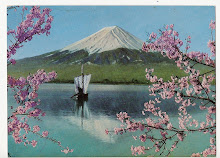
HIROSHIGE'S WORK ON LEFT, VAN GOGH'S ON RIGHT

YOKOHAMA PICTURE SHOW

YOKOHAMA PICTURE SHOW
Shot with my Petri in Yokohama 1962

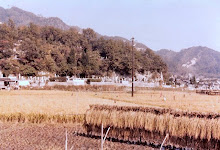
RICE FIELD IN JAPAN 1962

RICE FIELD IN JAPAN 1962
I took this with my PETRI in Kanagawa Prefecture

Tuesday, June 8, 2010

FOND MEMORIES OF A SPECIAL FRIENDSHIP


Sometimes, special friendships are not meant to last; the memories remain as young as springtime when a friendship ends in youth, not by choice, but by circumstance.

japanese_girlfriend_tiny


japanese_girlfriend_tiny
Originally uploaded by ferofax
FROM WHAT I UNDERSTAND, THIS IS AN INVITATION FOR A JAPANESE GIRLFRIEND, but visit FEROFAX photostream to get the details. Great graphics.

WIEN COFFEE SHOP, YOKOHAMA 1962 & 1963

A POEM ABOUT A YOUNG LADY WHOM I MET WHILE IN JAPAN. WE SHARED MANY GREAT TIMES. WE FREQUENTLY MET AT THIS COFFEE SHOP ON SATURDAY MORNINGS...
If i think long enough
my mind will take me
back to youthful
hope and promises
broken by me.

Regrets,
i have a few but
Fate has a way
of having
its way
no matter the beauty of sakura
or the time shared with
springtime love. Does time make the pain
less intense?
No, it only makes it more
severe when the blossoms
are so intense, so real...

WIEN COFFEE SHOP, YOKOHAMA 1962 & 1963

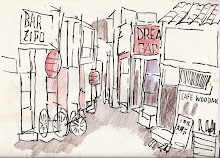
YOKOHAMA'S CHINATOWN & PEANUT CLUB 1960S: a watercolor by R.L. Huffstutter

YOKOHAMA'S CHINATOWN & PEANUT CLUB 1960S: a watercolor by R.L. Huffstutter

Evening Clouds Over Sankeien Garden Pond

Evening Clouds Over Sankeien Garden Pond
Copyright © Daniel Ruyle
Sankeien Garden in Yokohama

Uploaded by aeschylus18917 on 13 Aug

Sankeien Garden, Yokohama

Sankeien Garden, Yokohama
Image of tokyoviews.com

Uploaded by Tokyo Views on 1 Jun 10, 3.22AM PDT.

Saturday, June 5, 2010

Hikawa Maru, Yokohama


Hikawa Maru, Yokohama
Originally uploaded by Tokyo Views
Hikawa Maru, Yokohama
Image of tokyoviews.com

Uploaded by Tokyo Views on 5 Jun 10, 4.07AM PDT.
___________________________________________________

...it was a time for romance and we walked hand in hand like the two lovers we were and saw the sights of Yokohama, but that was long, long ago. A beautiful reminder of a beautiful time spent in Yokohama...

Friday, June 4, 2010

YOKOHAMA'S CHINATOWN & PEANUT CLUB 1960S: a watercolor by R.L. Huffstutter

This area was like a magnet and attracted youthful Japanese and young servicemen. It was the happening place with the Peanuts Club open 24 hours featuring a variety of live bands on an elevator that moved up and down four floors of spirited, smiling customers.

I remember hearing a Japanese band singing Country and Western for the first time. Their outfits looked like they were from the Grand Ol' Opry with sparkling sequins and saddle-stiching. They did an excellent job, but it was the rock and roll that really got the place moving.

Young Japanese students in their mid to late teens frequented this club as did servicemen in their late teens. Oftentimes, dependents of the servicemen stationed in Japan would wander off base housing to get into the scene. It was a most eclectic group of young people rocking around the clock and sipping coffee, wine Kirin, Asahi and Coca Cola mixed with Suntory's version of Crown Royal.

Yokohama - Japan


Yokohama - Japan
Originally uploaded by Satoshi-O
Yokohama - Japan
神奈川県横浜市神奈川区

Uploaded by Satoshi-O on 20 Apr 10, 8.06AM PDT.
________________________________________________

I CAN NEVER TAKE THE TRAIN FROM TOTSUKA TO HAKONE AGAIN....Robert L. Huffstutter

There are rails in my own lifetime, too many really.
There have been times when I never took that return trip and now, now I wish I had. But that train is long gone,
and the station is probably gone too.

Too much time has lapsed for me to ever return.
I take comfort in the fact that sometimes great romances are only meant to last a short time and then end, leaving our memories forever young.

When I reflect, I see only the beauty in the face
I saw when our romance ended,
young as it was when we met.

It will be a romance that will never grow old.

Friday, May 28, 2010

Nagasaki Peace Memorial

THIS IS ONE OF MANY PHOTOGRAPHS I MUST CONTEMPLATE WHEN I STUDY THE HISTORY OF WORLD WAR TWO. MY GRATITUDE TO THE PHOTOGRAPHER
_____________________________________________________

Nagasaki Peace Memorial
This is a shot I took of one of thousands of memorials at ground zero in Nagasaki, right outside of the front entrance to the Atomic Bomb museum and memorial. There are so many reasons today to remember the over 75,000 people who died instantly when the second atomic bomb was dropped on Japan, 60 years ago.

Here is a site dedicated to remembering the atomic bombing of Nagasaki: Remembering Nagasaki.

This site was set up on the 50th anniversary of the nuclear bombings of Hiroshima and Nagasaki. It includes photographs by the Japanese Army Photograper, Yosuke Yamahata. On August 10th, 1945 he took his camera and documented the devastation left in the wake of the second atomic bomb dropped on a civilian population. The pictures are stark, terrifying and heatbreaking. Many of these are on display at the atomic bomb museum at ground zero in Nagasaki. These should be required viewing for everyone. Please take a look.

Uploaded by musicmuse_ca on 8 Aug 05, 7.03AM PDT.

Sunday, May 23, 2010

The Search for Serenity Continues...

ESSAY ABOUT THE ROOFS OF JAPAN:

Memories of my time spent in Japan during the early 1960s by Robert L. Huffstutter

When I first arrived in Japan, in August of 1961, my first impressions were so many and varied it is difficult to describe in a short essay, but it is an essay I have been writing in various form throughout these past years. Each mention I make of Japan is part of this ongoing essay, one that will only end when my life ends. So, to say that Japan made an impression on me is an understatement. From that first day in August so many years ago, my love and fascination for Japan has increased into volumes, many yet to be recorded, though I continue writing.

Now, about the roofs. The roofs of Japan are like no other roofs anywhere, their tiles, their decor, their natural blend into the ever-present shilouettes of the hills behind almost every scene in the old woodblocks, the early photographs, the contemporary photographs, and in almost each of my own paintings of Japan.

I love the roofs of Japan, the ones in your image, the traditional and classic. But not those roofs only, no, but the roofs of the lesser structures too, those wooden structures still remaining that were constructed in the 19th century. They were plentiful to the eye in the early 1960s and I hope there are many left.

But those roofs constructed to simply provide a roof over one's head have a certain type of charm too; they are not just slopes of plywood like so many I see in the USA, put up to keep the rain out and nothing more. No these economical roofs constructed to keep one dry in Japan do not forget tradition or heritage, thus even those roofs have a personality of their own, and they weather soon to appear as though they were built when Hearn was looking down at Yokohama from his hilltop abode.

But enough about the roofs, those with history and those built for residential purposes and commercial purposes. The eventually converge and meet in the metropolitan congestion of cities in Japan. My relationship with the cities of Japan is confined mostly to Yokohama. Yes, Yokohama, I knew it well for my time spent. It was Yokohama where I went for sketching, for a getaway on weekends, for a time to party, Oh, Yokohama, I knew you well. Your roofs were alway the subject of my visual delights as I rode the trains to and from Sagami-Otsuka.

They flew by me quickly on those trains that stopped at towns like Tsuruma, Yamato, and so many others before finally reaching the train station in Yokohama. Oh, what a mass of humanity going one way and another, quickly and briskly, soon to disappear in one shopping street and then another.

During my first few weeks of residence in Japan, my footsteps fell on many streets that fascinated me, but were not the streets where I had intended on going. I was always looking for Iza-zake-jo, that street where everyone seemed to want to be, where there were hundreds of paper lanterns hung at a most ornate entry, plastic cherry blossom attached to the many lines that run along the way, sakura, sakura, pink and beautiful even when the season was over. And always the joyful aromas of delicious curry and soba with strange spices I had never tried. The roofs, the roofs, with their diverse angles popping up with impressive dragon motifs and little symbols I knew nothing about.

The roofs of Japan, yes, they made quite an impression on me my first day in Japan, and on my last day in Japan too. As the vessel that took me away from my beloved left its wake from the pier at Yokosuka, heading for my country, there were tears in my eyes for a country I had loved from my very first day, and a country that I would love forever.
We had shared so many hours together; we had shared stories abot our families and we shared sad moments when she told me about her father, a man she never knew. She was the daughter of a Burma Road soldier and never returned home. She had shown me his photo once, and then never again. He had looked so young and handsome in his uniform. We understood that all was forgiven. It had not mattered to us. What had mattered had been the time we had spent sketching in Sankien gardens, in Yamashita park, in Hakone and by the side of little roads in villages when we just decided to let the trains take us where we wanted to go.

As my vessel moved away from the pier, we waved, she with a white hankerchief, me with my hand and then my hat until there was no longer an image but only a memory. And the ship moved beyond the horizon. She turned and returned to her home in the large apartment buildings of Totsuka; I stayed on deck of that large transport, leaning on the rail, still seeing what I imaged were the shilouettes of those eternal mountains, but they were ghost images only. When the sun finally set on the Pacific, I turned in for the night and wrote a letter.

The roofs of Japan appear in my paintings and in my dreams. When I return, the reality of those roofs will make me smile once again.

THIS ESSAY HAS NOT YET BEEN COMPLETELY EDITED FOR ERRORS............

Friday, May 21, 2010

JAPAN TRAVEL POSTER FEB 2010

This is one of the most important departments we have. It should be directed by one who has the expertise and knowledge required to keep our nation safe. When one who has taken the oath to protect and preserve the people and the Constitution admits to ignorance of the Arizona Law 1070 in that she did not read the bill, one might question this woman's abilities. This is my opinion, and the opinion of millions. It is time for the President to Fire and Hire a new director, one approved by Congress

Tuesday, May 11, 2010

THE PEANUTS CLUB IN YOKOHAMA: 1961, 1962, 1963...four floors with an elevator of live music

IT WAS A SPOT WHERE MANY ROMANCES BEGAN. While many only lasted one or two nights, some lasted much longer_________

THE PEANUTS CLUB IN YOKOHAMA: 1961, 1962, 1963...four floors with an elevator of live music

Uploaded by roberthuffstutter on 11 May 10, 9.51AM PDT.

Yuuraku-gai St./遊楽街

Yuuraku-gai St./遊楽街
There was an arcade in old days.This street (Yuurakugai-st) intersects main street after this.

Uploaded by 慈朗-Yoshiaki on 23 Jan 10, 7.00AM PDT.

THE OLD IMPERIAL HOTEL in PRE-WW2 TOKYO -- Frank Lloyd Wright's Masterpiece in Japan

I STAYED HERE IN 1961: COST FOR A DECENT ROOM WAS ABOUT $10..................................HONEST. AND NOW IT IS GONE.
_____________________________________________________
Here we have T. ENAMI meeting up with the work of FRANK LLOYD WRIGHT. Wright's version of the Imperial Hotel, replacing those that came before it, opened on September 1st, 1923 -- the same fateful day on which the Great Kanto Plains Earthquake destroyed Enami's Photographic Studio -- along with most of Yokohama and Tokyo.

Thanks to Wright's modern building techniques that employed a large amount of steel girders and reinforcements, this hotel survived with only minor damage. Enami himself had rebuilt his studio on Benten Street and was back in business within two years.

After 45 years in service, the structure was finally razed in 1968 to make way for a new incarnation. Thankfully, conservation minded individuals assured that part of the Hotel was saved. Students of Wright's architectural works may continue to see and examine this original Entryway at Meiji Mura Architectural Park outside of Nagoya.

The new Imperial Hotel in Tokyo has also incorporated some pieces of Wright's embellishments as part of the public interior spaces --- at least I remember seeing some of it before passing out in the Bar after too many "Rum and Cokes".

For more on the long history of the place, and its many incarnations, see : www.imperialhotel.co.jp/cgi-bin/imperial_hp/index_e.cgi?a...

Frank Lloyd Wright was also a photographer, and a book of 50 of his photographs taken while in Japan has been published. (Try a used book connection thru amazon.com)

From a Lantern-slide by T. ENAMI of Yokohama. Ca.1923-28. For more on the Life and Times of Enami see : www.t-enami.org/


For the MOTHER LODE of T. Enami photographs here on the Web --- all CC rated for your creative use --- see this Flickr collection : www.flickr.com/photos/24443965@N08/collections/7215761388...


RANDOM SOBA : www.flickriver.com/photos/24443965@N08/random/

Casual Pose


Casual Pose
Originally uploaded by born1945
Thanks to BORN 1945 for adding this to the 40 years or older group of my Flickr Public Group about Japan. You can get there by following this photograph. It is an exceptionally clear photo for a vintage 1930, further evidence that the Japanese have been making some great cameras for a long time.
____________________________________________________
Casual Pose
These are from my collection of vintage Japanese photos. I believe these all date from the 1930s or maybe earlier.

Uploaded by born1945 on 19 Aug 09, 3.28PM PDT.


Originally uploaded by Art of the Luggage Label
ww.flickr.com/photos/huffstutterrobertl/galleries/72157622878175369

Sunday, May 9, 2010

Bhuddah


Bhuddah
Originally uploaded by softwareguy888
MOST IMPRESSIVE PHOTO that is visually pleasing and one that creates a certain peaceful serenity within my mind. To me, this is a most peaceful symbol of a positive religion and ideology.
_____________________________________________________
Bhuddah

Uploaded by softwareguy888 on 21 Apr 10, 2.37PM PDT.

Friday, May 7, 2010

UNIQUE PICTUREQUE IN EAST / WEST WAY...


Originally uploaded by utoutokumasan
5)大阪市北区中崎西 Nakazaki, Osaka.

Uploaded by utoutokumasan on 6 May 10, 2.25AM PDT
__________________________________________
There is an essence of the picturesque here that is shared by both the east and west, the occidental and the oriental. In the USA, one might imagine there would be ginham geese inside these dwellings. In Japan, there are probably the little dharma Bhudda and the legendary kitty cat. One very cool photo..

iyo_shinai2


iyo_shinai2
Originally uploaded by roberthuffstutter
ONE OF THE TROLLYS THAT CONNECTED ONE PART OF THE CITY WTH ANOTHER...This is not my photo, but one that I captured while browsing the internet. I am seeking the name of the photographer who posted it.

Thursday, May 6, 2010

THEN AND NOW #2 -- LOOKING SOUTH FROM MAEDA BRIDGE TO MOTOMACHI AND "THE 100 STEPS" (2006, New Yokohama)

MY MEMORIES OF MOTOMACHI ARE MANY AND FOND...This location has transformed again and looks nothing like it did in 1963...
___________________________________________________
THEN AND NOW #2 -- LOOKING SOUTH FROM MAEDA BRIDGE TO MOTOMACHI AND "THE 100 STEPS" (2006, New Yokohama)
You have just come from Picture #1 www.flickr.com/photos/24443965@N08/2409631100/ You are standing right in the middle of Maeda Bridge, taking advantage of the red light holding up the cars behind you ! (Directly over your head is an elevated expressway causing the shadow we are standing in. Cars and trucks high in the air are racing in both directions, following the path of the river that runs from right to left beneath you)

The "100 Steps" that used to be up ahead in front of you were never rebuilt, and you can no longer climb the hill there, either. The entire face of "The Bluff" from top to bottom is now covered with a grid of reinforced concrete anchored deep into the face of the cliff. It has become covered with ivy over the years, and now looks green again, seen behind the tall brick building that rises from the where the base of the Steps used to be.

Halfway ahead (past the girl on the bicycle) is the MOTOMACHI intersection. Turn left or right for the shop-lined avenue that was also a photographic staple of album views and numerous "Yokohama Postcards". And there you have it, another flickr "THEN AND NOW" from Old (and new) Japan.

If you have the "ALL SIZES" button over the image, you can go to the ORIGINAL size, and see how many signs you can read. Some are in English (or the Alphabet), starting with the THREE DOG BAKERY. Have fun !

Uploaded by Okinawa Soba on 12 Apr 08, 10.07PM PDT.

Tuesday, May 4, 2010

JAPANESE VILLAGE OF THE 60S BY R.L.HUFFSTUTTER

My impressions of Japan are many. Strangely enough, the older I become, the more pristine and clear some of those long ago images of 50 years ago become. I have a wealth of memories and impressions that are all golden and revered.

It is how I remember one of the towns between Yamato and Tokyo.

The train stations were always the main area of these little towns, now perhaps called suburbs or "burbs."

I remember seeing so many signs that I could not read, but the ones in English were the ones that stood out for a young American. Sony, Sony, Sony signs everywhere and so many radios and electronics gadgets even then

JAPANESE VILLAGE OF THE 60S BY R.L.HUFFSTUTTER
IMPRESSIONISM...in a village of Japan in the 60s.

Uploaded by roberthuffstutter on 3 May 10, 11.54PM PDT.

Monday, May 3, 2010

THE GEISHA


THE GEISHA
Originally uploaded by Okinawa Soba
THE FOLLOWING INFORMATION IS FROM THE FLICKR PHOTOSTREAM OF OKINAWA SOBA:

THE GEISHA
WHAT FOLLOWS IS SOME STRAIGHT TALK ABOUT THE GEISHA.

The life and labors of a GEISHA in old Meiji-era Japan was a far cry from the anachronistic, though still pretty and talented Geisha of the 21st Century. Way back during the Meiji-era time of these photos, she was truly an integral part of Japanese society who was called upon for numerous social activities and odd "media" realetd jobs that sometimes took her far from the "Geisha House" we usually associate her with. The Geisha were very busy girls !

First, a few words about the above photo, and then we'll get right to the REAL DEAL concerning these iconic symbols of "classic" old Japan.

THE ABOVE PHOTO is one of 260 hand-tinted, real albumen photographs tipped into the best editions of the 10-volume JAPAN -- DESCRIBED AND ILLUSTRATED BY THE JAPANESE (Published in Boston, USA in1897).

It was probably taken ca.1890-96 by K. OGAWA in his Tokyo studio.

Although there were plenty of other Geisha photos in this publication, the above image was chosen by the Japanese themselves to illustrate the only short but important statement in the book that specifically defined what a Geisha really did with her professional time. (The full statement is transcribed further below in this caption). I have amplified those comments with confirming descriptions from other sources.

I wrote the below because I was never satisfied with any other one-shot, on-line description of the Geisha's job responsibilities during those times. No doubt, my former profession as a photographer in Japan had something to to with driving me to make this statement on my photostream. I hope that something in both the content and links will be of some value to you.


*************************************


THE WORD GEISHA = GEI SHA 芸 者

[GEIKO is a Kyoto term for a GEISHA. Same thing. Six of one, Half a dozen of another]

The first character GEI 芸 is usually translated into English as Art, or the Arts.

The second character SHA 者 simply means Person.

Together they mean A person of the Arts. Therefore......ARTIST.

That's simple enough.

BUT....

SCULPTORS, PAINTERS, AND POTTERS ARE ALSO "PEOPLE OF THE ARTS".... MAY WE CALL THEM "GEISHA", AS WELL ?

NO.

The two Chinese characters for GEISHA are specifically reserved for the women in this so-named Geisha profession who have been trained from childhood in the Performing Arts such as Music, Dance, Speaking, or Singing for the purpose of entertaining others in venues clearly defined for them.

ENTERTAINERS is probably a better translation of the word, but that, too, is far from sufficient, and is more likely to conjure up images of Stand-up comedians or Lounge Singers in a Las Vegas Night Club act. Besides, there is already a general Japanese word for TV Personalities and "entertainers" in this category : 芸 能 人 GEI NOH JIN. (Notice that the first part of that word also uses the same 芸 GEI character used in GEISHA).

Actually, there is no good English equivalent for 芸 者, as the Geisha is purely a Japanese phenomena. Not even their neighbors, Korea and China came up with the exact same thing. Thus, it is simply better to use the word Geisha, and simply know what the word entails when you are talking about her.

IMPORTANT QUESTION : Returning to something already touched on above, if "Geisha" literally means "Artist" (or "A Person of the Arts"), then what words(s) do the Japanese use for other "Artists" like painters, sculptors, potters, engravers, and etc ?

EASY ANSWER : There are many other words in Japanese to describe the various artistic disciplines and art related subjects (some that use the same written character GEI 芸 of GEISHA as a part of the word or words, and others that do not include GEI). This goes for the different Japanese words used for Artists who are painters, potters, engravers, sculptors, and etc.

Even in English, we know that a RECORDING ARTIST is not the same as an artist like PICASSO or MICHELANGELO. The Japanese language is the same, and they have everybody covered with the right words and titles for whatever the heck they do.


NOTE : FOR AN IMPORTANT DEFENSE OF THE TERM "GEISHA GIRLS" AS AN ALTERNATE TO THE TERM "GEISHA", PLEASE SEE MY COMMENT APPENDED TO THE BOTTOM OF THIS CAPTION !


*****************************************************


THE TRUE-LIFE JOB DESCRIPTION OF A MEIJI-ERA GEISHA

The GEISHA (along with their MAIKO understudies) were in a class of their own.

Beautiful, talented, intelligent, and quick-witted --- they were also, on occasion, full of passion for the men that pursued them.

Although it is understood that they were NOT prostitutes, what they did in the old days (and even what they do now) has always been a little bit fuzzier in most peoples minds. The most common [and partly accurate] perception is this :

The "Geisha Girl" sings and dances the night away while pouring drinks, serving endless plates of hors d'œuvres, lighting the customers tobacco, making witty small talk, raising eyebrows and heartbeats with coy looks and innuendo, and building the egos of the male clientele --- all at drunken dinner parties held in the secluded, private "restaurants" attached to the famous Geisha Houses of the larger towns and cities.

Yes. She did do that. But in most cases, the Geisha of Japan entertained men at TEA HOUSES (Ochaya) scattered all over the open country and in urban Geisha districts. While doing this, and unless she was a free agent, she would live at an OKIYA --- a type of "boarding house" for Geisha and Maiko.

en.wikipedia.org/wiki/Okiya

But, there's more....

GEISHA WERE MODELS FOR PHOTOGRAPHERS --- Both IN and OUT of Character.

I have mentioned in some of my captions that the Geisha also served as models for the photographers, donning all sorts of garb to portray all classes of women in Japan. Some comments from flickr users expressed surprise (and doubt) that they were also "models", and wondered if that was really so.

Yes. That was really so. Please read this caption (and observe the photo) very carefully :

www.flickr.com/photos/24443965@N08/3329199977/

Saturday, May 1, 2010

Bell Tower (Kawagoe) 時の鐘 (川越)

Bell Tower (Kawagoe) 時の鐘 (川越)
large size
www.flickr.com/photos/pinboke/2945435231/sizes/o/

参考:KAWAGOE city official web site(English)
www.city.kawagoe.saitama.jp/icity/browser?ActionCode=genl...
時の鐘
www.city.kawagoe.saitama.jp/icity/browser?ActionCode=cont...


小森裕三 ペン彩画作品 Collection 
Detail 一覧
www.flickr.com/photos/pinboke/sets/72157603023492156/detail/
スライドショー Slide show
www.flickr.com/photos/pinboke/sets/72157603023492156/show/

Uploaded by pinboke_planet on 15 Oct 08, 8.14PM PDT.

Wednesday, April 28, 2010

Looking For My Constellation


Looking For My Constellation
Originally uploaded by Cwithe
WHAT A MASTERPIECE IN BLACK AND WHITE...Having lived in Japan and traversed these alleys time and again during the early 60s, I am glad to find they look very similar, not really changed by the 50 years that has passed since I dropped in and out of these haunts. Added this prize-winning photo to several galleries
______________________________________________________
Looking For My Constellation
LifeForms: Looking For My Constellation
Koenji.Tokyo

Uploaded by Cwithe on 5 Apr 10, 10.46AM PDT.

Monday, April 26, 2010

train through 'burbs


train through 'burbs
Originally uploaded by osaka.cafe
TIME DOES CHANGE ALL THINGS, BUT THE ROOFS STILL RETAIN THEIR HERITAGE TO A DEGREE, but they do look so much different than they did in the 60s. Of course, progress does change the shape of nearly everything. I preferred the more traditional roofs, but I can understand the reasons for change. Great photos by OSAKA.CAFE

train through 'burbs

Uploaded by osaka.cafe on 29 Jul 08, 9.52PM PDT.

neon at night


neon at night
Originally uploaded by osaka.cafe
A BEAUTIFUL ARRAY OF EVENING LIGHTS THAT WILL GROW BRIGHTER AS THE EVENING GROWS LONGER...
This is a favorite and a marvelous shot.

...I want to go to Japan one more time just to walk through these colorful alleys with smiling faces inside the little bars and sake shops...
neon at night

Uploaded by osaka.cafe on 28 Jul 08, 9.37PM PDT.

Oda Park


Oda Park
Originally uploaded by S. Oyama
Oda Park
The park where I played in youth.
小さいころよく遊んだ小田公園にて。

Uploaded by S. Oyama on 27 Dec 09, 10.45PM PDT.

Saturday, April 24, 2010

BLOGABOUTJAPAN: IMAGES, ART AND ESSAYS...

SUBSCRIBE TO THIS BLOG FOR UPDATES, ESSAYS AND NEW PHOTOS AS THEY ARE UNPACKED AND POSTED. YES, AFTER 50 YEARS, THERE ARE STILL OLD PHOTOS YET TO BE LOOKED AT AGAIN...
BLOGABOUTJAPAN: IMAGES, ART AND ESSAYS...

Uploaded by roberthuffstutter on 21 Apr 10, 12.07PM PDT.

Ayumu Regular / JAPANESE FONT

IF ONLY I COULD HAVE LEARNED THESE CHARACTERS IN 1961...

Ayumu Regular / JAPANESE FONT
Ayumu FONT . JAPANESE FONT.
Font made referring to child's character.
www.flopdesign.com/

Uploaded by FLOP DESIGN on 13 Feb 10

Wednesday, April 21, 2010

Saturday, April 17, 2010

ENOSHIMA, JAPAN: Reflections of holidays past...

ENOSHIMA in the 1960s was a unique little village with many local tourists. Americans were a rare sight, but there were some, like myself, who had discovered its charm and became fond of the destination for weekend getaways. It was like a trip back into time. I have written much about my time in Enoshima. One thing I will always remember about Enoshima is the rain. No matter how bright and clear the day was in the morning on our arrival, we could look forward to afternoon showers and then a brilliant and clear sunset. It was a different time, a serene time, a time for romance. I am glad I had the opportunity to spend some of my youth in Enoshima...

ENOSHIMA, JAPAN: Reflections of holidays past...

Uploaded by roberthuffstutter on 17 Apr 10, 7.26AM PDT.

Friday, April 16, 2010

SAYONARA 再見


SAYONARA 再見
Originally uploaded by gp_teo
SAYONARA 再見
開始與結束,都在機場。
歡聚與離別,也在機場。

北海道新千歲機場。Hokkaido New Chitose Airport. 2009 春天

Thursday, April 15, 2010

Japan Society Bento #47 (Explored #48/500!)

...it is a wish of mine, to return to Japan to sample what I missed my first time almost 50 years ago...

Japan Society Bento #47 (Explored #48/500!)
This is my entry to Japan Society's Virtual Bento Box Battle! These were the guidelines:

Guidelines
Although there is no strict theme to this bento box battle, special consideration may be given to entries incorporating any of these topics:
• The mission of Japan Society: “…to bring the people of the United States and Japan closer together in their appreciation and understanding of each other…”
• Imagery from the Japan Society Gallery exhibition Graphic Heroes, Magic Monsters: Japanese Prints by Utagawa Kuniyoshi from the Arthur R. Miller Collection
• Representations of iconic Japanese foods, landmarks, customs, or public figures.


I wanted to represent the mission of Japan Society by using a hamburger to symbolize USA and a sushi roll (an "iconic Japanese food") to symbolize Japan which is why they are together and smiling happily. I also added cherry blossoms because in 1912, Japan gave the United States cherry blossom trees as a gift to celebrate their friendship.

Uploaded by Laura Bento on 31 Mar 10, 8.42PM PDT.

Monday, April 5, 2010

Chitose River 1962


Chitose River 1962
Originally uploaded by asachitose
Photos of Japan in the 1960s continue to become harder to find as time reaches the "50 YEARS AGO" era. The viewer will note the success that Japan has achieved in the past fifty years. It is this gallery by Asachitose that has inspired this gallery. Too, the time I spend in Japan in the 1960s has been inspirational in creating this gallery, JAPAN IN THE 1960s.

Chitose River 1962
Chitose Hokkaido Japan Photo taken by Dwayne Michalski 1962
Other Photos at asachitose.com/ChHokPhotoindex.html

Uploaded by asachitose on 23 Jan 08, 10.04AM PDT.

Friday, March 12, 2010

さよなら


さよなら
Originally uploaded by roberthuffstutter
ESSAY ABOUT THE ROOFS OF JAPAN: Memories of my time spent in Japan during the early 1960s by Robert L. Huffstutter

When I first arrived in Japan, in August of 1961, my first impressions were so many and varied it is difficult to describe in a short essay, but it is an essay I have been writing in various form throughout these past years. Each mention I make of Japan is part of this ongoing essay, one that will only end when my life ends. So, to say that Japan made an impression on me is an understatement. From that first day in August so many years ago, my love and fascination for Japan has increased into volumes, many yet to be recorded, though I continue writing.

Now, about the roofs. The roofs of Japan are like no other roofs anywhere, their tiles, their decor, their natural blend into the ever-present shilouettes of the hills behind almost every scene in the old woodblocks, the early photographs, the contemporary photographs, and in almost each of my own paintings of Japan.

I love the roofs of Japan, the ones in your image, the traditional and classic. But not those roofs only, no, but the roofs of the lesser structures too, those wooden structures still remaining that were constructed in the 19th century. They were plentiful to the eye in the early 1960s and I hope there are many left.

But those roofs constructed to simply provide a roof over one's head have a certain type of charm too; they are not just slopes of plywood like so many I see in the USA, put up to keep the rain out and nothing more. No these economical roofs constructed to keep one dry in Japan do not forget tradition or heritage, thus even those roofs have a personality of their own, and they weather soon to appear as though they were built when Hearn was looking down at Yokohama from his hilltop abode.

But enough about the roofs, those with history and those built for residential purposes and commercial purposes. The eventually converge and meet in the metropolitan congestion of cities in Japan. My relationship with the cities of Japan is confined mostly to Yokohama. Yes, Yokohama, I knew it well for my time spent. It was Yokohama where I went for sketching, for a getaway on weekends, for a time to party, Oh, Yokohama, I knew you well. Your roofs were alway the subject of my visual delights as I rode the trains to and from Sagami-Otsuka.

They flew by me quickly on those trains that stopped at towns like Tsuruma, Yamato, and so many others before finally reaching the train station in Yokohama. Oh, what a mass of humanity going one way and another, quickly and briskly, soon to disappear in one shopping street and then another.

During my first few weeks of residence in Japan, my footsteps fell on many streets that fascinated me, but were not the streets where I had intended on going. I was always looking for Iza-zake-jo, that street where everyone seemed to want to be, where there were hundreds of paper lanterns hung at a most ornate entry, plastic cherry blossom attached to the many lines that run along the way, sakura, sakura, pink and beautiful even when the season was over. And always the joyful aromas of delicious curry and soba with strange spices I had never tried. The roofs, the roofs, with their diverse angles popping up with impressive dragon motifs and little symbols I knew nothing about.

The roofs of Japan, yes, they made quite an impression on me my first day in Japan, and on my last day in Japan too. As the vessel that took me away from my beloved left its wake from the pier at Yokosuka, heading for my country, there were tears in my eyes for a country I had loved from my very first day, and a country that I would love forever.
We had shared so many hours together; we had shared stories abot our families and we shared sad moments when she told me about her father, a man she never knew. She was the daughter of a Burma Road soldier and never returned home. She had shown me his photo once, and then never again. He had looked so young and handsome in his uniform. We understood that all was forgiven. It had not mattered to us. What had mattered had been the time we had spent sketching in Sankien gardens, in Yamashita park, in Hakone and by the side of little roads in villages when we just decided to let the trains take us where we wanted to go.

As my vessel moved away from the pier, we waved, she with a white hankerchief, me with my hand and then my hat until there was no longer an image but only a memory. And the ship moved beyond the horizon. She turned and returned to her home in the large apartment buildings of Totsuka; I stayed on deck of that large transport, leaning on the rail, still seeing what I imaged were the shilouettes of those eternal mountains, but they were ghost images only. When the sun finally set on the Pacific, I turned in for the night and wrote a letter.

The roofs of Japan appear in my paintings and in my dreams. When I return, the reality of those roofs will make me smile once again.

THIS ESSAY HAS NOT YET BEEN COMPLETELY EDITED FOR ERRORS............

Osaka


Osaka
Originally uploaded by orange_enigma
Osaka
A look at the famous Dotonbori Street

Uploaded by orange_enigma on 4 Mar 10, 7.42PM PST.

Saturday, March 6, 2010

Instead of Paris, it was Yokohama...

HEAR MY VOICE, I AM THE SOUL AND SPIRIT OF A CHILD OF THE 60S WHO HAS A STORY TO TELL. I HAVE SPOKEN TO WALT WHITMAN AND HE TOLD ME TELL THE TALE FOR THE FUTURE AS HE TOLD HIS TALE IN "SONG OF MYSELF"

In 1959,I was a very unsettled youth, wanting to get out of high school and into the real world. I wanted adventure. I wanted to find love and romance--I had heard it was a lot of fun to be in love and look into the eyes of a lover, in my case I was seeking a charming lady, a beautiful woman who would fulfill every youthful fantasy I had ever entertained about love and romance.

For awhile, I saw myself going to Paris and living in an attic or garret, painting oils of the Seine, the buildings of the left bank, wandering around in the fog in a Paris night and miraculously meeting the woman of my dreams. She was a brunette in a coat with a flaired collar and she was wearing heels. Her eyes were dark and misty, but so alive with passion and expectations.

She was leaning against a lamp post smoking a cigarette, a lonely sort with eyes that sparkled through the fog. Our eyes would meet, I told myself, and we would only say a few words, for we knew that we had met our destined love. And then into the little bistros to drink wine and stare into each other's souls. There was the candle in the bottle with the wax dripping. There was a tablecloth of red and white checkered gingham.

Yes, there would be those early moments before the sunrise when there were soft whispers. And we would tour the Louvre, hand in hand, and life would be a great love affair filled with oil paintings, novels laying about our place overlooking the Seine, in view of the Eiffel tower of course.

And the wine would always be sweet and keep our lips moist with passion. That would be the life, the Strauss version of the "Artist's Life" and the French music would always be within earshot of our windows overlooking the streets of Paris. Life would be so great I would never have to board a tramp steamer to seek my love and fame and fortune.

All of that would come for I was young and would be young forever. There was nothing like age. Age was a myth, for I saw no change in her face or mine as our life in Paris grew larger than life itself. Youth, eternal youth. There was no such element as time to disturb our lively steps and our inhalation of the air that was forever fresh with the fragrance of her essence and the flowers from the vendors who passed by our widows below.

We had it all, youth, wine, roses and all the time. We would read and read more; we would write and paint. We would dance the nights away in some brick-walled basement bistro, we would.....we would dance...we would never look at clocks or calendars.....we were young.

By Robert L. Huffstutter

Monday, March 1, 2010

THE SIDEWALKS OF JAPAN


Originally uploaded by Morenchi
Even the sidewalks of Japan have their own identity through the artist's signature work. These squares look like tiles, a distinctively Japanese touch of beauty to the urbane. Thanks to Morenchi for this photo. Click on his highlighted name and see his entire collection.
Uploaded by Morenchi on 1 Feb 10, 5.04AM PST.

Fushimi Inari Shrine in Kyoto, Japan

Fushimi Inari Shrine in Kyoto, Japan

Uploaded by Sebbux! on 2 Aug 09, 11.57PM PST.

Sunday, February 28, 2010

Shimizu-cyo 清水町

HERE IS AN ALLEY IN THE BAR AREA OF A TOWN IN HOKKAIDO, JAPAN'S NORTHERN ISLAND. ACCORDING TO THE PHOTOGRAPHER, THE MORE THINGS CHANGE, THE MORE THEY STAY THE SAME. That is to paraphrase, but the wisdom of the photograper, YOSHIAKI, is very astute and keen.
_____________________________________________________
Shimizu-cyo  清水町
1727 The way of the bar
An entertainment district in Chitose-shi. Even if the name of the shop changes, the appearance does not change in old days.

The photograph from the position same here asachitose's photostream ・・・・・Chitose9907・・・??

Uploaded by 慈朗-Yoshiaki on 2 Nov 09

Saturday, February 27, 2010

The Search for Serenity Continues...

ESSAY ABOUT THE ROOFS OF JAPAN: Memories of my time spent in Japan during the early 1960s by Robert L. Huffstutter

When I first arrived in Japan, in August of 1961, my first impressions were so many and varied it is difficult to describe in a short essay, but it is an essay I have been writing in various form throughout these past years. Each mention I make of Japan is part of this ongoing essay, one that will only end when my life ends. So, to say that Japan made an impression on me is an understatement. From that first day in August so many years ago, my love and fascination for Japan has increased into volumes, many yet to be recorded, though I continue writing.

Now, about the roofs. The roofs of Japan are like no other roofs anywhere, their tiles, their decor, their natural blend into the ever-present shilouettes of the hills behind almost every scene in the old woodblocks, the early photographs, the contemporary photographs, and in almost each of my own paintings of Japan.

I love the roofs of Japan, the ones in your image, the traditional and classic. But not those roofs only, no, but the roofs of the lesser structures too, those wooden structures still remaining that were constructed in the 19th century. They were plentiful to the eye in the early 1960s and I hope there are many left.

But those roofs constructed to simply provide a roof over one's head have a certain type of charm too; they are not just slopes of plywood like so many I see in the USA, put up to keep the rain out and nothing more. No these economical roofs constructed to keep one dry in Japan do not forget tradition or heritage, thus even those roofs have a personality of their own, and they weather soon to appear as though they were built when Hearn was looking down at Yokohama from his hilltop abode.

But enough about the roofs, those with history and those built for residential purposes and commercial purposes. The eventually converge and meet in the metropolitan congestion of cities in Japan. My relationship with the cities of Japan is confined mostly to Yokohama. Yes, Yokohama, I knew it well for my time spent. It was Yokohama where I went for sketching, for a getaway on weekends, for a time to party, Oh, Yokohama, I knew you well. Your roofs were alway the subject of my visual delights as I rode the trains to and from Sagami-Otsuka.

They flew by me quickly on those trains that stopped at towns like Tsuruma, Yamato, and so many others before finally reaching the train station in Yokohama. Oh, what a mass of humanity going one way and another, quickly and briskly, soon to disappear in one shopping street and then another.

During my first few weeks of residence in Japan, my footsteps fell on many streets that fascinated me, but were not the streets where I had intended on going. I was always looking for Iza-zake-jo, that street where everyone seemed to want to be, where there were hundreds of paper lanterns hung at a most ornate entry, plastic cherry blossom attached to the many lines that run along the way, sakura, sakura, pink and beautiful even when the season was over. And always the joyful aromas of delicious curry and soba with strange spices I had never tried. The roofs, the roofs, with their diverse angles popping up with impressive dragon motifs and little symbols I knew nothing about.

The roofs of Japan, yes, they made quite an impression on me my first day in Japan, and on my last day in Japan too. As the vessel that took me away from my beloved left its wake from the pier at Yokosuka, heading for my country, there were tears in my eyes for a country I had loved from my very first day, and a country that I would love forever.
We had shared so many hours together; we had shared stories abot our families and we shared sad moments when she told me about her father, a man she never knew. She was the daughter of a Burma Road soldier and never returned home. She had shown me his photo once, and then never again. He had looked so young and handsome in his uniform. We understood that all was forgiven. It had not mattered to us. What had mattered had been the time we had spent sketching in Sankien gardens, in Yamashita park, in Hakone and by the side of little roads in villages when we just decided to let the trains take us where we wanted to go.

As my vessel moved away from the pier, we waved, she with a white hankerchief, me with my hand and then my hat until there was no longer an image but only a memory. And the ship moved beyond the horizon. She turned and returned to her home in the large apartment buildings of Totsuka; I stayed on deck of that large transport, leaning on the rail, still seeing what I imaged were the shilouettes of those eternal mountains, but they were ghost images only. When the sun finally set on the Pacific, I turned in for the night and wrote a letter.

The roofs of Japan appear in my paintings and in my dreams. When I return, the reality of those roofs will make me smile once again.

THIS ESSAY HAS NOT YET BEEN COMPLETELY EDITED FOR ERRORS............

Thursday, February 25, 2010

Imperial Palace and Lake at Hakone

Imperial Palace and Lake at Hakone
Japanese handcolored albumen print. Late 19th century, unidentified photographer.

Uploaded by ookami_dou on 25 Feb 10, 7.53AM PST.

Wednesday, February 24, 2010

お酒


お酒
Originally uploaded by ajpscs
お酒
no rules, no limitations, no boundaries it's like an art
© All Rights Reserved by ajpscs

An intelligent man is sometimes forced to be drunk to spend time with his fools.
Ernest Hemmingway

Uploaded by ajpscs on 11 Jul 09, 8.03AM PST.

Tokyo Night Walker


Tokyo Night Walker
Originally uploaded by ajpscs
ONE OF THE BEST NIGHT SHOTS OF TOKYO I HAVE SEEN IN A LONG WHILE...............

Tokyo Night Walker
Tokyo Night Walker-YURAKUCHO
Yurakucho provides a glimpse of Japanese life from the early postwar period, with its many izakaya (Japanese-style bars, denoted by their red lanterns known as akachochin) and outdoor yakitori restaurants ('yakitoriya'), many of which are located under the train tracks serving Tokyo's JR Yamanote Line. Because of its many traditional Japanese-style eating establishments, as well as its location on the Yamanote Line with easy access to Tokyo Station, Yurakucho is a favorite drinking spot for businessmen on their way home from work.

From Wikipedia, the free encyclopedia

see details on LARGE VIEW

explore YURAKUCHO
no rules, no limitations, no boundaries, it's like an art

Uploaded by ajpscs on 12 Aug 06, 10.49AM PST.

Monday, February 22, 2010

ARTIST WITH A BRUSH PHOTOGRAPHED BY AN ARTIST WITH A CAMERA -- A Rare Image from Old Japan

My favorite collector and curator of old photographs of Japan, Owinawa Soba, has one of the best collections of vintage photos of Japan that I have seen during my lifetime. Had I gone to certain museums in Japan while I was in Japan for several years in the early 60s, I would have most likely seen thousands more than those in Okinawa Soba's collection, but I did not visit those photo museums. Thus, I can honestly assess Okinawa Soba's collection as the best I have seen in my nearly 70 years of life. It is with this favorite photo of an artist in his tatami-matted space and studio that this gallery is introduced.
_____________________________________________________

THE BELOW TEXT ACCOMPANIES THE PHOTO IN OWINAWA SOBA'S PHOTOSTREAM and this image is linked to his Flickr Photostream. To visit his fantastic Flickr Photostream, follow this link or click on the image:

ARTIST WITH A BRUSH PHOTOGRAPHED BY AN ARTIST WITH A CAMERA -- A Rare Image from Old Japan
This ca.1915-1928 image by T. ENAMI is only one of a handful of fine views I've seen from the Bakumatsu, Meiji, and Taisho eras showing a seated artist at work in old Japan (Link to another one given at bottom of this caption). Not only do we have a large "canvas" being brought to completion, there is also a blank wall-scroll waiting for an inspired picture (or work of calligraphy), and a finished scroll as well.

The large array of brushes and pigment bowls is also clearly shown. This is a far cry from what a similar Western scene would show --- the artist seated in a chair or standing before a canvas, with his colors spread out for mixing on a hand-held pallet. A similar scene of shallow pigment bowls being used by "colorists" who are busy tinting old Meiji-era photographs can be seen here : www.flickr.com/photos/24443965@N08/2494892753/

The word "Artist" was a pretty clear term until Photographers came along. Suddenly, an "Artist with a brush" (so to speak) had to contend with "Cameramen" and "Photographers" also calling themselves "Artists". And some of these folks with brush and paint took exception to that. They complained that Photographers with their funny little boxes and (horror of horrors) unnatural black and white "miniatures" --- many of them crooked or blurred --- had no right to fraudulently deceive people by calling their images works of "Art".

Photographer Herbert G. Ponting, who toured Japan for most of five years from 1901 to 1906, took exception with the complaints of the old Painters. He was one of those who did not like to be called a Photographer. He preferred the term "Artist" -- especially as it applied to himself. : www.flickr.com/photos/24443965@N08/2360328226/

In the end, the dust surrounding the semantics and pride associated with the word "Artist" settled out with an acceptable compromise. Today, we can find many old imprints and engraved card backs with "ARTISTIC PHOTOGRAPHER" accompanying the name of whoever the illustrious (or long forgotten) cameraman might be.

These days, no one would argue that the camera has produced some of the most soul-stirring images the world has ever seen --- both, still, motion, stereoscopic, and holographic (and even creative combinations of all these!). Much of it can be found right here on flickr. And no one disputes the fact that there are also a lot of uninspired Painters out there who could not paint their way out of a bathtub.

As for the above anonymous "brush image" of a waterfall in the snow (painted a second time by sunbeams onto the small piece of glass inside of Enami's camera), I am as happy with it as I am with photograph itself.

For a related "artist" image see : www.flickr.com/photos/24443965@N08/2544461382/

For more on Enami see www.t-enami/services

Uploaded by Okinawa Soba on 31 May 08, 2.22PM

Tokyo Game Show 2008 Hudson booth girls

SOME OF THE MOST BEAUTIFUL YOUNG WOMEN IN THE WORLD LIVE AND RESIDE IN JAPAN. SOMEHOW, I MUST RETURN SOMEDAY SOON......
_____________________________________________________
Tokyo Game Show 2008 Hudson booth girls
View On Black

Uploaded by nuetaipoo on 11 Oct 08, 9.22AM PST.

Tuesday, February 16, 2010

Canal


Canal
Originally uploaded by Quietude
MEMORIES INSPIRED BY MY FRIEND, QUIETUDE'S PHOTO

This is the type of scene I often saw whenever I wandered off of the main streets of Yokohama and Tokyo. I enjoyed seeing the people at work and away from the commercial areas.

Noting the prow, or bow, of the boat in the background on the right, I recall that many of the boats back then looked like this one, with a traditional fishing boat appearance.

As you know, this was during a great rebuilding era and the construction went on around the clock, or at least I thought it did. Oftentimes, I wandered far off the main road, down into the industrial and canal areas just to see the way life really was. It was a most valuable experience for me because I learned much about the Japanese people on my solo trips into the midst of the city's heart and soul.

All alone on these type of adventures, I was met with much friendliness, kindnesses that I remember fondly to this day. I could say much more, but I learned much about the character of Japan on these solo trips.

Oftentimes, workers would offer to share a moment of sake.
Sometimes, I took a drink, and sometimes I did not, depending on how much I had or had not drank. Usually, on these little journeys, I preferred to remain alert and sober.

There was much construction and noise, and sometimes heavy equipment running.

I regret I did not take photos of these sites.
____________________________________________________

Canal
Could be around ShinKoyau area
1950s-1960s

Uploaded by Quietude on 29 Nov 09, 7.33AM PST.

Monday, February 15, 2010

Tsukiji Fish Market, Tokyo


Tsukiji Fish Market, Tokyo
Originally uploaded by TVJ
There is an intensity here that defines the spirit of the Japanese talent for commerce in all fields. This photo is a priceless image of such commercial talent.

Tsukiji Fish Market, Tokyo

Uploaded by TVJ on 8 Jan 10, 12.32AM PST.

Salt Shop


Salt Shop
Originally uploaded by TVJ
Salt Shop
Tsukiji Fish Market, Tokyo

Uploaded by TVJ on 8 Jan 10, 12.32AM PST.