HIROSHIGE AND VAN GOGH

HIROSHIGE AND VAN GOGH
Read About Van Gogh's Secret Visit to Japan

WELCOME TO BLOGABOUTJAPAN

WELCOME TO BLOGABOUTJAPAN
IT WAS A SPECIAL TIME IN MY LIFETIME

APT WITH TATAMI MATS, a special time in my lifetime in Japan...

APT WITH TATAMI MATS, a special time in my lifetime in Japan...
Watercolor by R.L.Huffstutter

COMPARISONS IN ART

COMPARISONS IN ART
HIROSHIGE'S WORK ON LEFT, VAN GOGH'S ON RIGHT

YOKOHAMA PICTURE SHOW

YOKOHAMA PICTURE SHOW
Shot with my Petri in Yokohama 1962

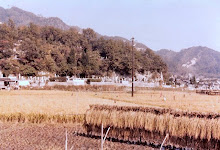
RICE FIELD IN JAPAN 1962

RICE FIELD IN JAPAN 1962
I took this with my PETRI in Kanagawa Prefecture

Monday, January 9, 2012

Noge Akari

Noge Akari by owenfinn16
Noge Akari, a photo by owenfinn16 on Flickr.

Framed perfectly and a very inviting piece of work for those considering a journey to the Orient. Another inspiring photographic work by James, OWNENFINN16.
__________________________________
One of my favorite works as per lanterns of the Orient. Editor

Sunday, January 8, 2012

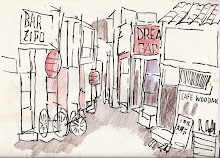
Alley in old Yokohama

Alley in old Yokohama by lioil
Alley in old Yokohama, a photo by lioil on Flickr.

WHO REMEMBERS THE GLORY DAYS OF
Isezakicho Street?

Added to several galleries with the following text:

AN ALLEY IN OLD YOKOHAMA...Isezakicho Street
Photograph by Bun Oshita
___________________________________

I recall this street when it was decorated with beautiful paper lanterns and real cherry blossoms during Sakura Season. It was a time of great celebration; sake and Sapporo beer, Asahi beer, Suntory whisky and sushi were free to all who chose to wander down this street of wonders,old Isezakicho Street. Hopefully, I will be able to walk down this most famous street again before I leave this earth.

Robert L. Huffstutter

Saturday, January 7, 2012

YOKOSUKA TIME LAPSE


YOKOSUKA TIME LAPSE a video by i_love_japan_29 on Flickr.

YOKOSUKA TIME LAPSE
first timelapse, more of an experiment than anything. It took an entire day to shoot and put together, please tell me what you think. Text by I LOVE JAPAN, the videographer who made this feature.

Thursday, January 5, 2012

Fujifilm T64

Fujifilm T64 by dolcejp0310
Fujifilm T64, a photo by dolcejp0310 on Flickr.

横浜港未來
Photo by Frank Huang....
___________________________
Take a look at all of unique masterpiece photographs.

Fujifilm T64

Fujifilm T64 by dolcejp0310
Fujifilm T64, a photo by dolcejp0310 on Flickr.

横浜

+

+ by dolcejp0310
+, a photo by dolcejp0310 on Flickr.

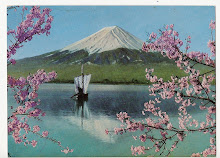
ONE OF THE BEST MT FUJI PHOTOGRAPHS I HAVE SEEN. The last time I viewed this beautiful scene was in November of 1963. It has become even more beautiful.

Thanks to DOLCEJP0310 taking this masterpiece photo

Tuesday, January 3, 2012

BLOGABOUTJAPAN: a blog by R.L.Huffstutter

BLOGABOUTJAPAN: a blog by R.L.Huffstutter
Yokohama Harbor in 1961. Photo taken with what was a brand new Petri camera. Processed from a slide. In the far right background are the factories of the Mitsubishi plant in the area. Most of the harbor boats were similar to those above and were multi-purpose vessels. From what I understand, the large maritime building in the background still remains.

Monday, January 2, 2012

1941-Life-Cover

1941-Life-Cover by jdodson_303
1941-Life-Cover, a photo by jdodson_303 on Flickr.

Pan American will always hold a warm spot in my heart and mind, especially in my spirit. It was on a Pan American 707 that I flew to Tokyo, Japan in August of 1961.

We stopped in Hawaii long enough for refueling and long enough to purchase a post card. I recall a quick glance at Diamondhead and then off again. The pilot dipped down shortly after takeoff from Honolulu to give us a look at a small island, Midway Island, where a WWII battle made the difference in World War II.

It was on this flight where the new attendants, costumed in silk kimonos, served us Kirin beer. They handed us small rolls of hot linen for wiping our faces. "Make you feel fresh," the attendant told us. I recall how beautiful the young Japanese woman was. It was then, I believe, that I fell in love with Japan, even before I arrived. Yes, thinking back about the flight 50 years later, I must say with all honesty that it was one of the highlights of my life.

We landed at the old Tokyo International. From the time we took off in the a.m. from San Francisco, I did not see the evening until I was, at last, checked into my new duty station at NAS Atsugi, Japan.

It was a most exciting adventure for a young lad still in his teens. It was certainly one of the experiences of my LIFE.
__________________________________

1941-Life-Cover by jdodson_303

IZKY

IZKY by kibayashi
IZKY, a photo by kibayashi on Flickr.

WHAT RED LANTERNS MEAN TO ME

(Inspired by a photograph by Kibayashi)

There is nothing like the image of red lantern
to stir my memories. The red lantern in Japan
must mean many things
to many people,
but to me, a
red lantern
is a promise of a sort of peace and kindness, a beacon
in the night that beckons those who might
be wandering,lost in the night.

There is nothing like the sight
of a red lantern glowing to
stir up my old memories of
warm and friendly faces.
The red lantern
in Japan
must mean many things to many
people,
but to me, a red lantern
is a promise of a sort, a kindness glowing
in the night, a kind of beacon in the night
that calls to those who might be
wondering, lost in the night.
The sight of a red lantern
glowing in the darkest part
of a city anywhere in Japan
was like a Zen moment
in a sea of strangers I never knew,
strangers who never knew me,
yet people who showed love by smiles and
a cup of tea or sake, a moment in time
unspoken, unreported, but remembered
for untold years, pleasant memories not
forgotten, but always a kind of kindness
meant for me to to follow, a place of shelter and
silent kindness.

By Robert L. Huffstutter

I really do appreciate your photograph. It has inspired me to write a verse about what your image means to me personally. Hopefully, you will approve. I have added your photo in several of my galleries and included it in my online blog, BLOGABOUTJAPAN. Thank you, Robert

IZKY

IZKY by kibayashi
IZKY, a photo by kibayashi on Flickr.

WHAT RED LANTERNS MEAN TO ME

(Inspired by a photograph by Kibayashi)

There is nothing like the image of red lantern
to stir my memories. The red lantern in Japan
must mean many things
to many people,
but to me, a
red lantern
is a promise of a sort of peace and kindness, a beacon
in the night that beckons those who might
be wandering,lost in the night.

There is nothing like the sight
of a red lantern glowing to
stir up my old memories of
warm and friendly faces.
The red lantern
in Japan
must mean many things to many
people,
but to me, a red lantern
is a promise of a sort, a kindness glowing
in the night, a kind of beacon in the night
that calls to those who might be
wondering, lost in the night.
The sight of a red lantern
glowing in the darkest part
of a city anywhere in Japan
was like a Zen moment
in a sea of strangers I never knew,
strangers who never knew me,
yet people who showed love by smiles and
a cup of tea or sake, a moment in time
unspoken, unreported, but remembered
for untold years, pleasant memories not
forgotten, but always a kind of kindness
meant for me to to follow, a place of shelter and
silent kindness.

By Robert L. Huffstutter
___________________________________

IZKY by kibayashi

Saturday, December 31, 2011

Untitled

Untitled by owenfinn16
Untitled, a photo by owenfinn16 on Flickr.

One of the best photographs of Mt. Fuji I have ever seen. The last time I saw Mt. Fuji was in December of 1963, just prior to saying sayonara. Of course, at that time, there were very few skyscrapers, if any. It was a period of reconstruction, thus few building like these were built. RLH Editor
___________________________________

THANKS TO OWENFINN16 for permission to add this great photo to my blog.

Friday, December 30, 2011

Sankien Gardens, Yokohama 1961 by R.L.Huffstutter

It was the first park I visited in Japan. It was also the destination for a first date. The park is very special to my memories
__________________________________
Creative Commons License
This work is licensed under a Creative Commons Attribution 2.0 Generic License.
__________________________________
This applies to all material that I have created, photos, art, etc

Tuesday, December 27, 2011

I NEVER FOUND IT THIS DANGEROUS, REALLY...

LOST IN THE DARKEST PART OF TOKYO

Earl Norman had quite an imagination. There was never a time during my tour when I encountered any scenes of this nature, thankfully.

I recall getting lost in the back streets of Tokyo during the first few months of my tour. It was in the spring of 1962.

I was near a canal; it was very dark and there was not a taxi anywhere. I kept walking, not fearful at first until my mind began tormenting me.

I was walking softly, listening to sounds I could not identify, no voices, nothing. I kept walking. I was in an industrial area, a reconstruction area. Suddenly, as I was crossing a small bridge over a canal, I heard the sound of an outboard motor. I leaned over the railing and watched the small boat get underway without lights.

I listened as the motor faded. How did I lose myself from the streets where the nightlife never ended. I must have been in a daze. My mind kept tormenting me as I recalled how I had gotten lost one night in Los Angeles in 1960.

But I was in Tokyo. In a few moments, I saw what appeared to be a red lantern glowing outside a row of buildings. I walked in and was greeted heartily by friendly faces, men twice my age. After several complimentary drinks of sake, a cab pulled up outside and the men smiled, laughed heartily and told the driver to take me to the Ginza.

At the moment, I never thought about what the men had been doing only a few years short of two decades in their past.

By Robert L. Huffstutter

fire

fire by timtak
fire, a photo by timtak on Flickr.

DEFINING THE BEAUTY OF PHOTOGRAPHY IN JAPAN...a photo by Timothy Takemoto. Follow the link and view a most unique Flickr photostream.

Saturday, December 24, 2011

The Chrysanthemum and the Sword

It is my beief that no Westerner is able to define the Japanese culture accurately. While what many Westerners write might sound authentic, even to some Japanese, it is only the Japanese who are able to understand "Japanese character."

During World War Two, the definition of the Japanese was easy to define, especially in propagana, however, once the Treaty of Peace was signed in San Francisco in 1952, Japan's transformation became a national miracle in that the entire nation of Japan succeeded in terms of its economy like no other nation on earth had ever succeeded. When one looks at the ruins of Japan in 1945 and the nation as it is today, there is no Westerner capable of explaining how the Japanese transformed those ruins into one of the world's most brilliant economic powers on earth. By Robert L. Huffstutter
__________________________________

The Chrysanthemum and the Sword by timtak

Thursday, December 22, 2011

Neon Floods

Neon Floods by Eka Raditya
Neon Floods, a photo by Eka Raditya on Flickr.

Wow...how I wish I was here. What a great photo. This is perfection. This photo might make me call JAP and make reservations. If ever I have seen a photo that would make a great TRAVEL POSTER, this is the one I would select for Japan.
__________________________________

EKA RADITYA ROOSHARTANTO PHOTO
Copyrighted

YOUNG LAD IN SCHOOL UNIFORM ON BIKE 1961

YOUNG LAD IN SCHOOL UNIFORM ON BIKE 1961
This is one of my best shots with my Petri. Young student zooms by at the perfect moment and makes this photo a special image. Yokohama 1961, by R.L.Huffstutter

Tuesday, December 20, 2011

566px-Sailor-fuku_for_winter

MAKING FRIENDS WITH JAPANESE STUDENTS IN 1961 AND 1962 By Robert L. Huffstutter

Upon seeing the students in uniforms, many of the Americans who had just arrived in Japan were confused and some worried that the nation was getting ready to militarize again.

However, upon seeing the beautiful young ladies of high school age, they soon realized the uniforms were for academic purposes. I recall my first trip to Yokohama. I took a sketch book and a few pencils and made my way toward the harbor. I always loved harbors, thus seeing Yokohama was a high priority. Helpful young students guided me to what became a favorite place, Yamashita Park. As I sketched, dozens of young lads in dark blue uniforms, many with hats, gathered around. Their smiles and polite attitudes assured me they were somewhat fascinated by seeing a single American sketching the harbor. Very soon, they were asking me questions in English, much to my surprise, and we enjoyed a pleasant conversation, though not fluent, very understandable. It was a pleasant introduction to a nation I remembered as one of fierce warriors when I was still in grade school. Naturally, movies like "Sands of Iwo Jima" came to mind, but those images were transformed very early into something completely different, a peaceful and friendly mass of polite people. When I noticed the young women in their late teens in school uniforms, I could not help but marvel at their natural beauty.

At the time, I did not notice the absence of men twenty to thirty years my senior, men who were old enough to have been my father's age. Thus, the majority of the Japanese I met throughout my tour were mostly my age, younger or older, but now I realize they were those men who were fortunate to have escaped conscription as the peace was made in 1945.

Most of those men, a generation older than myself, were not scholars but busily employed in the reconstruction of their nation. They were the men who were in construction, the men buillding the concrete forms from bamboo, the men drilling into old concrete, and those who were running new electrical lines below and above ground.

Amongst this diverse nation were groups of male and female students going about, laughing and in seemingly good moods, in school uniforms. I grew to enjoy their presence around me wherever I wandered during the daylight hours. Many of the students in school uniforms were in their late teens. It was not unusual to see these students in some of the coffee and wine shops that were so common around the different areas of Yokohama.
__________________________________

566px-Sailor-fuku_for_winter by roberthuffstutter

Friday, December 16, 2011

USS GENERAL W.A. MANN AP-112,sailing from Yokosuka to San Francisco

SAYONARA, A TIME THAT I CANNOT FORGET...

It was a cloudy morning on the day in December of 1963 when I said goodbye and boarded this huge transport, USS GENERAL MANN, for the journey home. It was a day I will not forget.

The vessel arrived in San Francisco ten days later on my 22nd birthday. As all of us might have a tendency to do, this is one of the time frames I use when remembering certain seasons of my lifetime.

Perhaps there are those who do not store memories in compartments and open them by simply recalling the month and year we might want to remember either for a few moments or for hours of entertainment and reflection.

I did not go straight to the train station or airport, I flagged a cab and found a cheap hotel downtown and spent the next three days unwinding with Canadian Club. When I became bored with my own company, I found nearby bars to frequent. Conversation was cheap and entertaining. It was then that I began writing my poetry again, in spiral notebooks and on bar napkins.

Sure, it was good to be back in the USA, but the emotion of returning did not compare with the emotions I experienced from leaving Japan.

Leaving a joyful lifestyle where there was love and a lifestyle I enjoyed to return to a land of strangers where the lifestyle was indifferent to my values created an immediate state of despondency, one that has remained, more or less, throughout the ages.

Time is of no consequence; time does not heal sorrows. When one day is gone, it is gone in an instant and does not matter if it has been gone for only 24 hours or decades; it is no respecter of persons and their emotions. Time is not a sentimental element; time has no energy or mercy--it is immune to the suffering of one individual or generations.

Time and emotions are as distant from the other as is life from death.

The above is from a passage in a novel I am writing, AN AMERICAN WANDERING.

By Robert L. Huffstutter

I did not take the photo of the USS GENERAL MANN. Photo and information available on Wikipedia.

Tuesday, December 6, 2011

Kamakura sunrise 2

Kamakura sunrise 2 by i_love_japan_29
Kamakura sunrise 2, a photo by i_love_japan_29 on Flickr.

TOTAL MASTERPIECE PHOTOGRAPHY...photos of Mt Fuji just do not get better than this one. I could look at this for a long time without tiring. Again, your talent for capturing perfect light is apparent. Beautiful work.
_____________________________________
Kamakura sunrise 2 by i_love_japan_29

harumi_arrive

harumi_arrive by hobbyfrontier
harumi_arrive, a photo by hobbyfrontier on Flickr.

I am not a doll collector, but I am a firm believer in FREE ENTERPRISE and this product looks like it should do well. Cute, unique and packaged with creative genius.

Free enterprise signifies a free society, a society where artists might flourish and use their creative imagination. The cute little numer HARUMI ARRIVE was the inspiration for this gallery, one of many I have dedicated to freedom.

It appears that HOBBY FRONTIER has a line of products collectors might like to see. Simply follow the link.

Thursday, December 1, 2011

MOTOMACHI STREET SCENE 1962, By Robert L.Huffstutter

Exactly what was on my mind when I painted this picture was the joy and thrill of being in a country I had long dreamed of seeing, a country as different from America as day was from night. From the moment I arrived in Japan in August of 1961, it was love at first sight. I liked the sounds, the variety of smells and scents, the totally different buildings, the people.

Being an artist, I wanted to capture the scenes. I started sketching on street corners and found that the people would gather about. I liked the attention, especially the attention of the young ladies--such beautiful young women with their long and beautiful hair worn casually with soft curls at shoulder length.

Painted from hotel window in Yokohama in 1961. Tempra, pen and ink, with sake. Plein-aire with smoke.

Painted this scene, and many others, from hotel window in Yokohama shortly after arriving in Japan in 1961. Somewhere among my old memorabilia there are a few more of these plein-aire paintings. Many, however, were given to the bar and shop owners in the areas where I stayed, mostly in Motomachi and sometimes, Chinatown and the Bund area.

Friday, November 25, 2011

Streetcar in Tokyo near Shinbashi Station, circa 1955

Mid 1950s Tokyo. A horde of pedestrians crosses in front of a 6000-series Tokyo metropolitan streetcar.

The sign in the foreground says that this is A Avenue and 10th Street. The US military imposed a system of street names on the major thoroughfares in Tokyo after the end of World War Two. Lettered avenues radiated from the Imperial Palace clockwise. "A Avenue" ran south from the southeast corner of the Imperial palace, on Hibiya Boulevard (Hibiya Doori). The numbered streets were basically major roads essentially ringing the palace. 10th is Outer Moat Boulevard (Sotobori Doori). So this is the Nishi-shinbashi Crossing, just south of Hibiya Park. At the time the neighborhood - and the streetcar stop - was called Tamuramachi (田村町). We must be looking east, because the sun is hitting the face of the building on the right.

It pre-dates 1957, when Tokyo's streetcars were repainted yellow. The lines which ran on Hibiya Doori through this intersection were 1, 5, 35 and 37.

There's an outside chance that this streetcar is 6103 (see the trailing digit 3), which is now in Shinmei Toden Shako Park in Bunkyo Ward.

Here's a zoom on a part of the map published by the US military in 1948 with the street names.

And here's the neighborhood on an interactive 1956 map of Tokyo.

Found in an antique store's photo bins.

Text by Rob Ketcherside

_________________________________

This is a fond reminder of the era. I was here in the early 60s.

Monday, November 21, 2011

TRAINS OF YOKOHAMA IN EARLY 60S

Scanned from a slide shot with my Petri 7. I have a lot of slides I need to scan before too much more time passes. I don't know how many years a slide will last, but this one was shot in 1961, so it's 50 years old and doesn't look too bad after a little editing with PICNIK.

There was still much reconstruction going on doing my tour of duty.

Now, after the terrible tragedy of the recent earthquake and tsunami, there will be more years of construction and sorrow